Four signs; that's all it takes to spot your own child feeling safer around you than with their other, narcissistic, parent.
It's a sad fact that they cannot rely on both of you if you happen to share them with someone narcissistic, but here's the fact you must keep returning to:
You are that child's safe space. It's an honor as much as it can be an exhaustion, but if you were ever in any doubt as to whether or not your child is comforted by you, these six signs will confirm it.
And honestly, I had a mother tell me last month that she cried in her car after realising her son ran to her, not his dad, when he scraped his knee.

1You don't even ask, and they tell you things
Any child wants to feel safe and loved, right? They don't always wait until they're asked before they start talking about what's on their mind, but they will only really do that with a parent they know will listen and support them. Does that sound like a narcissist to you?
I don't think so! You'll notice in the car, or maybe at dinner, conversations or questions will be pinned to you. Your child will simply start talking, and that won't have anything to do with you pushing them. It's because they wanted to. And I think that's a beautiful thing.
They know they can open up and just be themselves, and you're there for it. Mom, can I tell you something? I don't like it when dad… Why does dad get so mad? Right there is the point where you know you're the safe parent.
You know you're the one your child comes to when something is on their mind, and when they need your love. That love for them is real, and without condition.
Even if they can't articulate that at their age, their coming to you for all your answers laced with patience and authenticity is the reason they chose you to be safe around.
One mom told me her seven year old whispered questions in the car because, in his words, "the car is where you actually listen." That stuck with me.
Children will go silent around people they don't like or trust. They will hold back information and refuse to let the people on the receiving end of that know anything about them. The cautious steps, the strange, "I'm trying to decide what kind of person you are" looks.
They all count as not feeling safe, and they're all red flags within themselves. If your child is opening up and saying all these kinds of things to you, and holding back with their other parent, then they're already starting to piece these toxic dynamics together.
 See also12 Toxic Ways A Narcissistic Dad Controls The Entire Family
At such a young age, too.
2When they're upset, it's you they turn to
I don't mean when a child has calmed down, I mean you're sitting there with the narcissist, and they get upset. Who do they turn to? It's you. It's always you.
As those tears fall, the narcissist will look blankly, wondering what to do, wondering what the big deal is, and then looking at you as your child chooses you to run to for comfort.
What more does a child want in their time of need other than someone who isn't going to be too busy, or who will push them away, or who will sigh and tell them they're making a big deal out of nothing?
You do none of those things, and I think that speaks volumes for being that safe space for your child. They trust you not to make their sad moment worse. They trust you with their tears, and your child doesn't need to hide how they really feel with you.
 See also5 Passive Aggressive Tactics Narcissists Use That You'd Never Recognize As Abuse
I had a client tell me her little boy would wait until dad left the room before he'd cry. He knew. Kids always know who's safe.
That is a big deal in the parenting world, and of course, in a perfect world, both parents would possess equal rights to those times where their child is upset. Sadly, we don't get that with narcissists.

3They watch your face right before they react
It will say it all, trust me. Children are forever doing the next thing to make you laugh or respond, but that response from you is always going to be calm, or at least measured.
If you're angry, you won't shout, but you'll see it as an opportunity for a conversation rather than conflict. So, your child drops something. They make a mistake somewhere. Something happens that doesn't go according to plan. Before they react to the problem, they look to you.
It's a tiny flicker, but they're using that split second to gauge what you're thinking and feeling all in the look you're giving them. You might wonder why they do that, and here's the thing.
Your child wants to know if it's safe to feel how they feel about the situation. Are they going to be told off for spilling their milk, or are you going to help them mop it up and say, "Mistakes happen, and that's okay.
Next time, try to put it further on the table so it doesn't topple over the edge."
 See alsoNarcissists Are Incapable Of Giving You These Things No Matter How Long You Wait
If you're growing up around a narcissist, you're growing up with someone who becomes a professional at reading the facial reactions of adults. It's what they've had to do all this time to survive, and if they get that reading wrong, everything will blow up.
Then comes the punishment, or the cold shoulder that means they're in their narcissistic parents' bad books for as long as that parent feels like it.
I had a client tell me her son used to freeze mid sentence just to check her eyebrows. That's not a child. That's a tiny hostage negotiator.
Why should a child be in anyone's bad books? If you agree with me; you're that safe parent. If your child is looking to you for safety, and sees that look on your face, they've already decided where the soft landing lies.
One look is really all it takes, and trust me, you can oversee this so much, until you cannot unsee it.
4They feel freer to act younger around you than the other parent
Freedom! Every child loves to feel free, and if possible, that freedom should be carried into adult life, right? Children are far more likely to lose that spark if they're raised by parents who are loving and accepting, as well as free souls themselves.
If you grow up around a narcissistic parent, you're definitely growing up too fast. These little people learn fast how to manage their moods and stay quiet when the atmosphere calls for it.
They also have to try hard to figure out the rules of the narcissist's game all the while the game is constantly changing and shifting by the day. When they're around you, the safe parent, they learn what it's like to be a kid all over again.
They can play and know they won't get blamed for anything. They can play and know they won't be teased or criticized. Isn't that a beautiful thing? There's the silliness that comes out, and the funny voices or jokes.
You'll hear the made up words, the giggles that go on for too long, the running around for no reason. That's a kid who finally feels off duty.
The flip side of that is you can expect far more cuddles, and I don't want you to assume that's a form of regression; it's just kids being kids. They're relieved. Relieved they have you, and relieved you come with that shelter of safety.
You can't buy that, but you can rest assured knowing that your child has you among all the toxicity they have to tolerate in their home growing up. That is the best thing you can offer.

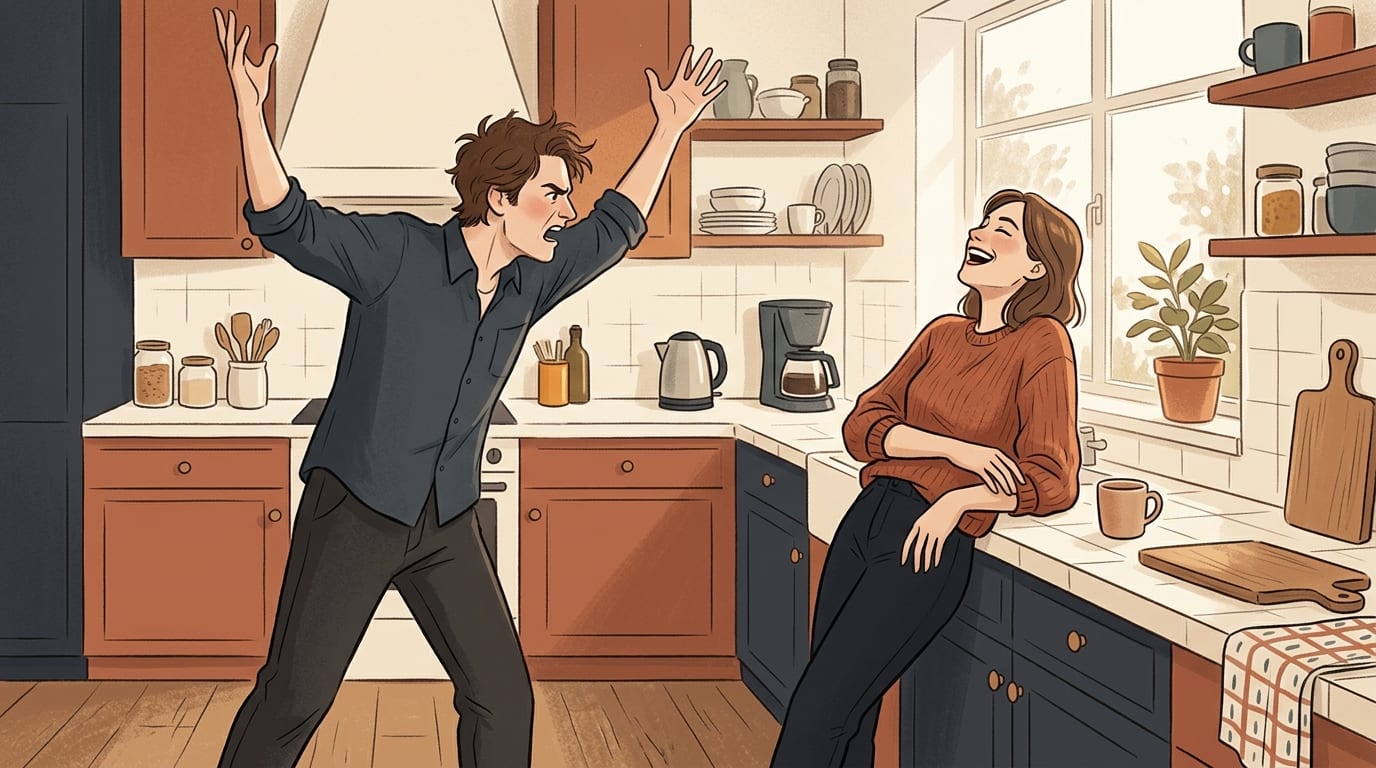 See alsoThere’s One Type of Woman a Narcissistic Man Never Wants to Deal With
5They don't flinch when you walk in the room
Think about what a flinch actually is. It's the body reacting before the brain catches up. It's the nervous system saying, "Uh oh, incoming." Kids who live around a narcissistic parent do this all the time without even realising.
So when your child hears the front door and doesn't tense up, doesn't go quiet, doesn't quickly tidy the thing they were playing with, that's huge. Their shoulders stay where they are. Their face stays soft. They might not even look up from what they're doing.
Compare that to how they might be when the other parent walks in. Suddenly the toys are being packed away too fast. The TV volume drops. They sit up straighter, or they disappear into their room without a word.
You are the safe entrance. You are the doorway that doesn't come with a warning. And that isn't a small thing at all. That's years of you being steady, quietly, without needing credit for it.
Their nervous system trusts you. That trust was earned.

6Their body language changes the second it's just you two
You know that feeling when you've been holding your breath and didn't realise it? That's what happens to your child when the narcissistic parent leaves the room.
 See also5 Creepy Things Every Narcissist Hides Somewhere in Their House
Watch their shoulders. They drop. Their jaw softens. They stop sitting on the edge of the sofa like they're waiting for something bad to happen, and they actually lean back into the cushions.
Little feet get tucked up. Hands stop fidgeting. That tight little face they wear around the other parent melts off, and suddenly you're looking at your kid again. Just your kid. Loose, silly, chatty.
Some children even start humming, or singing to themselves, when it's just the two of you. That's a huge one for me. Humming means safe. A child who feels watched or judged does not hum.
And their voice changes too. It gets louder, sillier, more them. The tiptoe voice they use around the narcissistic parent goes away, and you get the real one back.
That shift is the whole thing, really. Their body was telling the truth all along.


