Narcissists are brilliant storytellers. And like all brilliant storytellers, they know what kind of story gets the most attention.
Tragedy. Injustice. Betrayal. The hero wronged by a cruel world.
They tell that story over and over, with themselves in the lead role, because it does two things at once: it keeps them at the center of every conversation, and it buries any accountability for what they actually did.
The worst part is that they often believe it. You can see it in their eyes.
They genuinely think they're the victim, even when the evidence in the room clearly points the other way. You're standing there with the bruise, metaphorical or otherwise, and somehow they're the one crying.
If you've spent any real time around a narcissist, you've lived this.
You've felt the strange vertigo of being the actual victim of someone who insists the role belongs to them.
Here are six reasons why they do it, and why it works on almost everyone except the people who've seen it up close.

#1 They feel constantly deprived
Narcissists carry a bottomless hunger for attention. No amount is ever enough.
When they feel the spotlight drift away from them, even for a moment, something in them panics and they start reaching for ways to pull it back.
The quickest way to pull it back is to become the most pitiable person in the room.
Your birthday? They suddenly remember how neglected they felt on theirs. You mention you're not feeling well?
They have something worse and have been quietly suffering for weeks. You tell a story about something hard you're going through?
Within minutes, somehow it has become a story about them, and you're the one nodding sympathetically.
This constant deprivation isn't really about the things they claim to be missing.
It's about an undeveloped sense of self that needs external validation to exist. They cannot sit quietly with themselves and feel okay.
So they keep performing the part of the person being overlooked, because sympathy is the easiest form of attention to manufacture.
And the person who suffers most from this attention economy?
 See also10 Ways Narcissists Sabotage Themselves
You. You become the audience, the sympathetic ear, the one who keeps pouring energy into someone who treats you like a source of fuel instead of a person.
#2 They are hypersensitive to the smallest slight
You would think that someone who dishes out so much criticism would be able to take a little.
They cannot. Narcissists are hypersensitive, and not in the poetic sense. In the petty, grudge-holding, you-wronged-me-in-2017 sense.
A text message interpreted unfavorably. A tone of voice that wasn't even there. A social media post they decided was about them.
A small comment misheard at a family dinner. Any of these can trigger a days-long campaign in which they are the injured party and you are the heartless one who wounded them.

Everyone deals with setbacks. Everyone gets misunderstood sometimes. Most people feel mildly annoyed, process it, and move on. Narcissists do not move on.
 See also5 Passive Aggressive Tactics Narcissists Use That You'd Never Recognize As Abuse
The dent to their pride lingers, and it accumulates. They keep a running tally of every imagined wrong, and they'll pull from that list whenever they need ammunition against you.
This is where the blame game begins. Your words get taken out of context. Your intentions get rewritten.
What you actually said no longer matters, because they have already cast themselves as the one who was hurt, which means you have already been cast as the one who did the hurting. Good luck arguing your way out of it. You won't win.
#3 They throw pity parties and invite the whole town
A narcissist's favorite event is the pity party they host for themselves. They send out the invitations in the form of long, emotional phone calls to friends and family.
They post cryptic status updates. They bring it up in passing at work. The guest list is always anyone who will listen long enough to feel sorry for them.
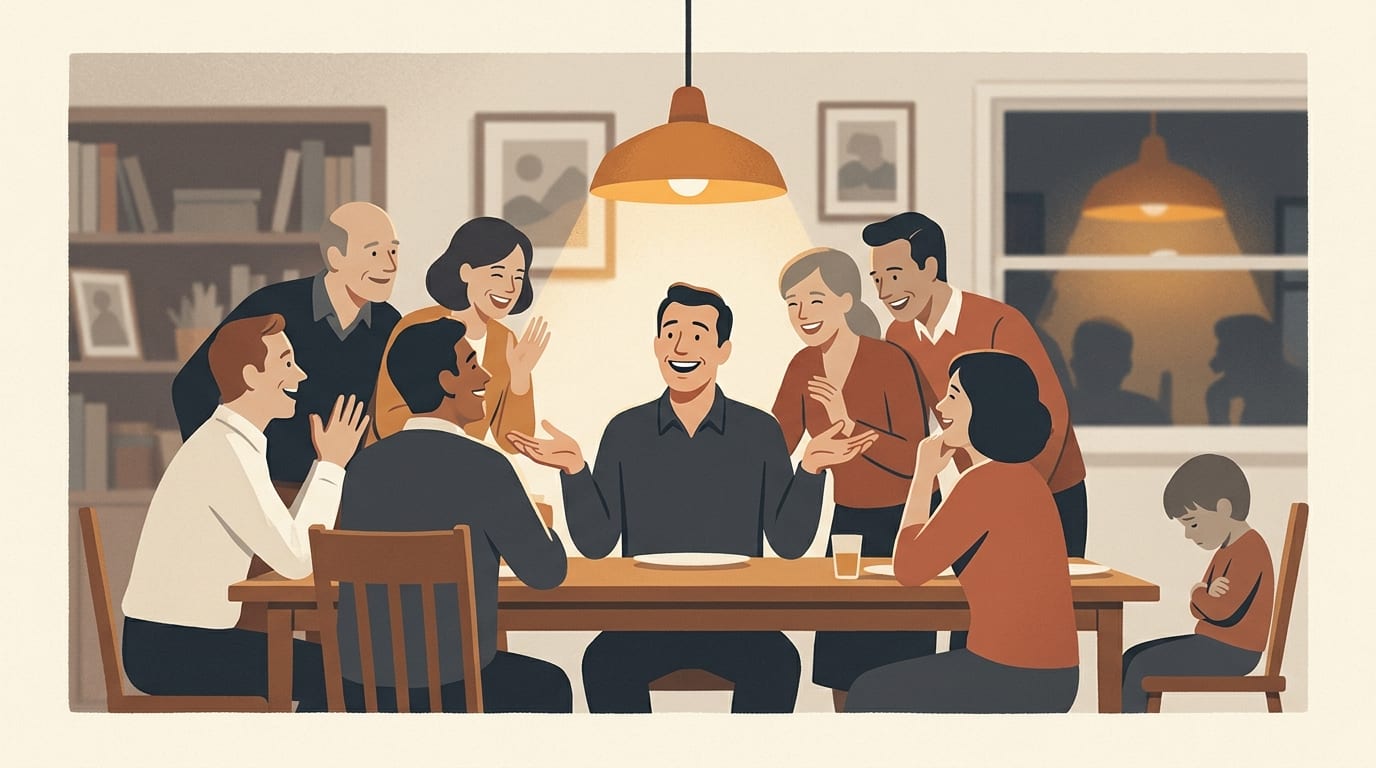
The performance is carefully crafted. You will hear a version of events in which they were blindsided, betrayed, mistreated, or abandoned. The real story, the one with context, the one where they were the one doing the hurting, never makes it to the invitation. It has been edited out.
What makes this so effective is that the people in the audience usually don't know you.
They only know the narcissist, and the narcissist is charming, and the narcissist is currently crying or close to it. Of course they believe the story. Why wouldn't they?
This is why you often find yourself suddenly disliked by people you barely know.
The narcissist has been hosting parties about you, and you were never invited to defend yourself. The only way out is to stop trying to rewrite their guest list.
Let the people who were charmed by the show keep believing in the show. You don't need to be understood by everyone.
#4 They want someone to blame, and today that someone is you
Sometimes you just happen to land on their list. Maybe you did something that genuinely hurt them.
 See alsoA Narcissist Can Fool Every Adult in the Room, but Not Their Children's Body Language
Maybe you did nothing at all and they're just having a bad week. Maybe your life is going well and that feels, to them, like a personal attack.
Whatever the reason, they need a target. Narcissists cannot sit with their own failures or discomfort.
The feelings have to go somewhere, and the easiest place to put them is on the nearest person who won't fight back hard enough to stop it.
This is rarely about you. You are a convenient surface for feelings they cannot own. Next week it might be a coworker. The week after, a sibling.
The specific target changes, but the pattern stays the same. Someone has to be the villain in the story they're telling themselves, because if no one is the villain, they might have to look in the mirror and see themselves clearly. That option is off the table.
What makes this especially disorienting is how confidently they blame you.
They are not tentative. They are not checking their own memory. They are fully committed to the story, and their certainty can make you doubt your own. That doubt is the point.
#5 Their empathy is missing, and they use the emptiness as a weapon
When was the last time they said any of these things to you and meant it?
"I'm sorry you're going through this. What can I do to help?"
"That sounds really hard. I'm here if you need to talk."
"I can see why that hurt. I'm listening."
If you're struggling to remember, that tells you something important. These sentences require a baseline level of empathy that narcissists simply do not have access to.
They can mimic the words when it serves them, especially early in a relationship when they're trying to hook you. But they cannot sustain the feeling.

When you're struggling, they don't know what to do with it. They can't meaningfully enter your experience, because their internal world has no room for anyone else's pain.
So they do the next available thing. They redirect. They make your crisis about how your crisis is affecting them.
They get impatient with how long you're taking to recover. They accuse you of being too emotional or too needy or too much.
And somewhere in the middle of you trying to get your own needs met, you realize they have once again become the injured party, and you are once again the one who needs to apologize.
The lack of empathy is not a flaw they're working on. It's a structural feature. Expecting empathy from a narcissist is like expecting a fish to climb a tree. It doesn't matter how many times you ask.
 See alsoWhy Narcissists Can Love Having Children but Hate Being a Parent
#6 They desperately need love, and they cannot give it to themselves
Underneath the grandiosity, the confidence, the constant need to be the most important person in the room, there is a person who fundamentally hates themselves.
You wouldn't guess it from the outside. The outside is all performance. But the performance is exhausting, and it exists because the alternative, sitting quietly with who they actually are, is unbearable to them.
So they chase love externally. They need it in a quantity no human relationship can actually provide.
And when the love they're chasing inevitably withdraws, usually because they've pushed too hard or hurt someone too deeply, they add it to the list of evidence that the world is cruel to them.
You'll hear the familiar phrases:
"I don't know what I did wrong."
"Why does this keep happening to me?"
"They were the love of my life and they just left me."
What they leave out of these stories is the long slow pattern of behavior that drove the other person away. The cold treatment.
The manipulation. The insults disguised as jokes. The boundary violations. The moments where the other person tried to explain their pain and was met with rage or dismissal.
All of that gets edited out. What remains is a pure narrative of abandonment, with the narcissist as the tragic hero.
This is the deepest reason they make themselves the victim. It's not strategy. It's the only way they know how to feel okay.
 See also5 Creepy Things Every Narcissist Hides Somewhere in Their House
Playing the victim is how they avoid the thing they're most afraid of, which is turning the lens around and looking at themselves honestly.
What to do with all of this
You can't fix this pattern in them. You won't get them to see it.
The person you're dealing with has spent years, maybe a lifetime, building a worldview in which they are permanently wronged, and no amount of rational conversation is going to dismantle that.
What you can do is stop auditioning for the role they cast you in. You are not the villain. You are not cruel. You are not the reason they feel the way they feel. Their story about you is their story. It doesn't have to become yours.
The vertigo fades eventually. You start to trust your own version of events again. You stop trying to correct the record with people who believed the pity party.
You realize that being misunderstood by a narcissist and the people they've charmed is not actually a tragedy. It's often the first sign that you're finally seeing clearly.
They will always be the victim in the story they tell. You get to decide which story you believe.


